

Let’s Look At The Research
The coalition’s approach is grounded in a foundational research study that illuminated Nebraska’s behavioral health strengths, challenges, and opportunities for progress.
Nebraska faces a behavioral health crisis marked by rising mental health and substance use challenges.
More than 486,000 Nebraskans live with a mental health or substance use disorder, and as demand grows, waitlists lengthen and too many fall through the cracks. Addressing this challenge requires a coordinated, community-rooted approach that brings together providers, systems, and local voices.
-
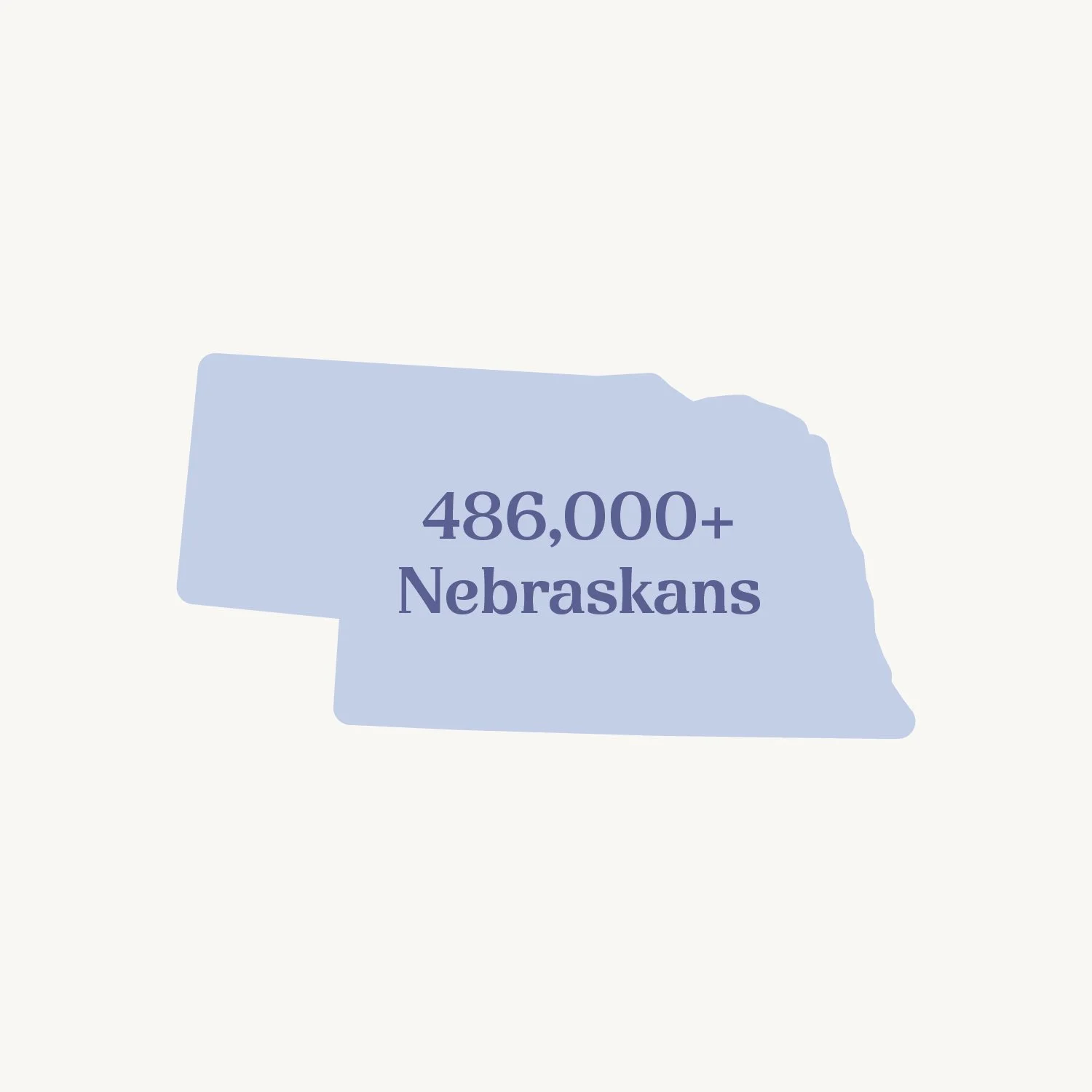
486,000+ Nebraskans
live with a mental health
or substance-use disorder -
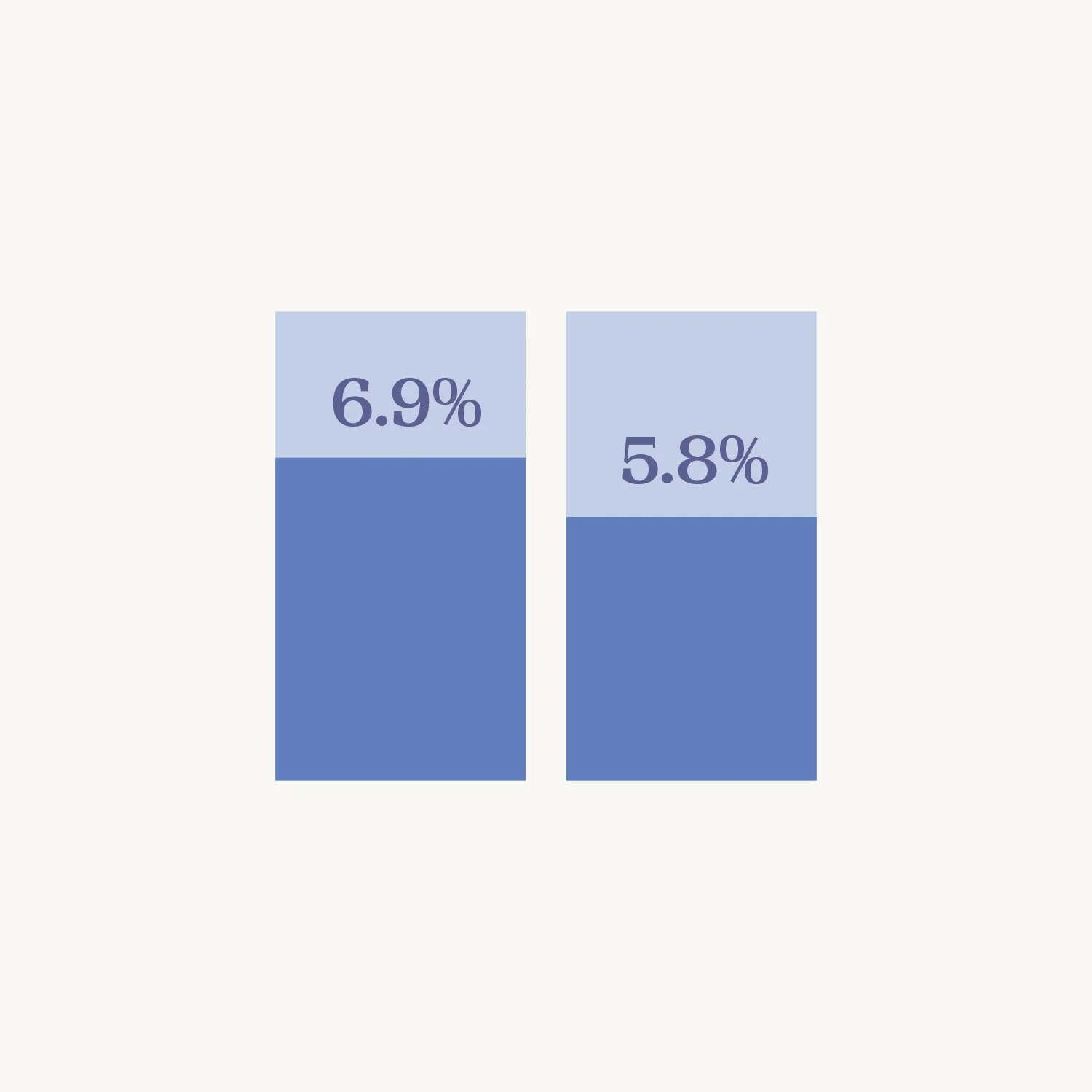
6.9% of adults
experience serious mental illness (above the U.S. average)
-
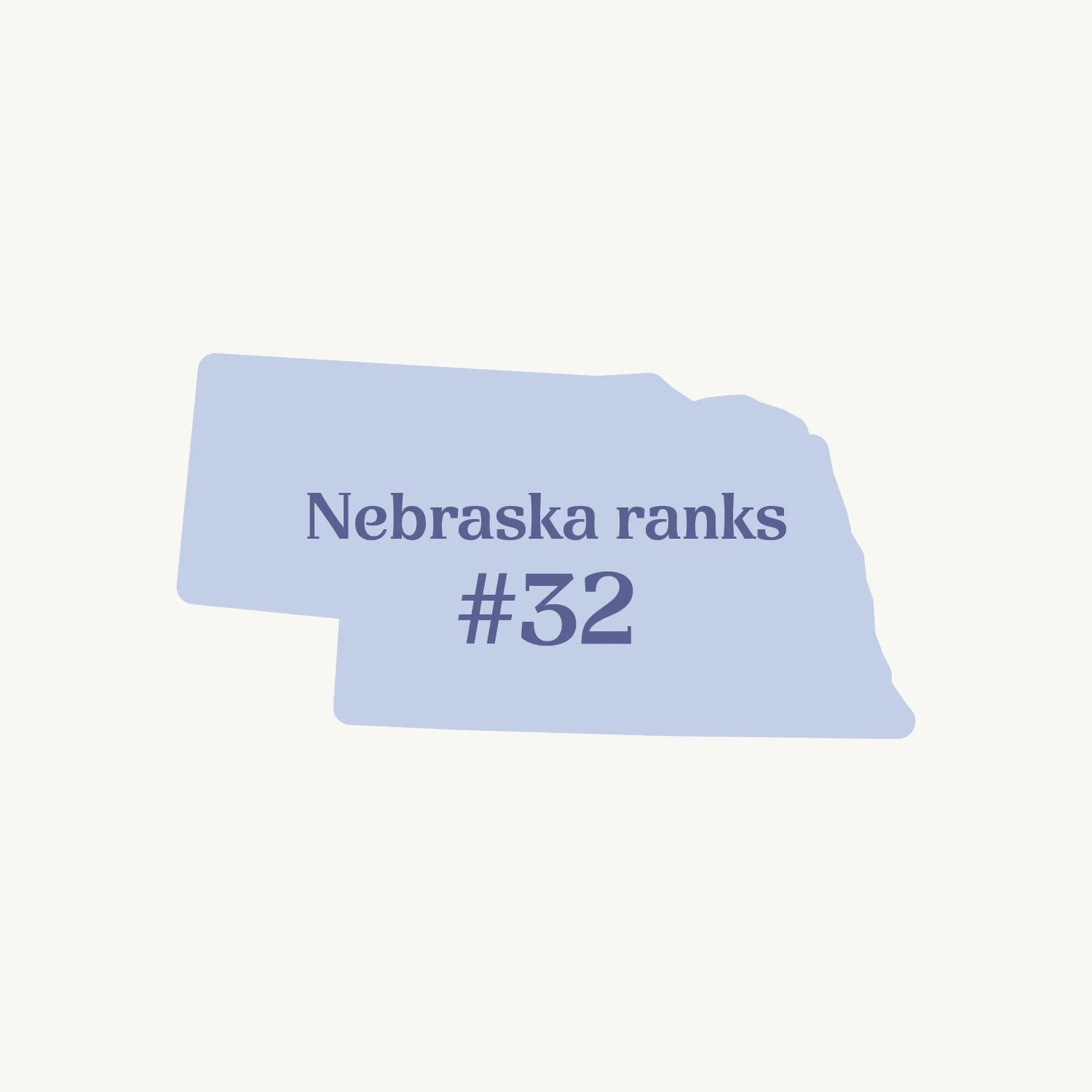
Nebraska ranks #32
in overall mental health and #37 in access to care
-

One in four adults
in Nebraska experience mental illness
Study Deliverables
-
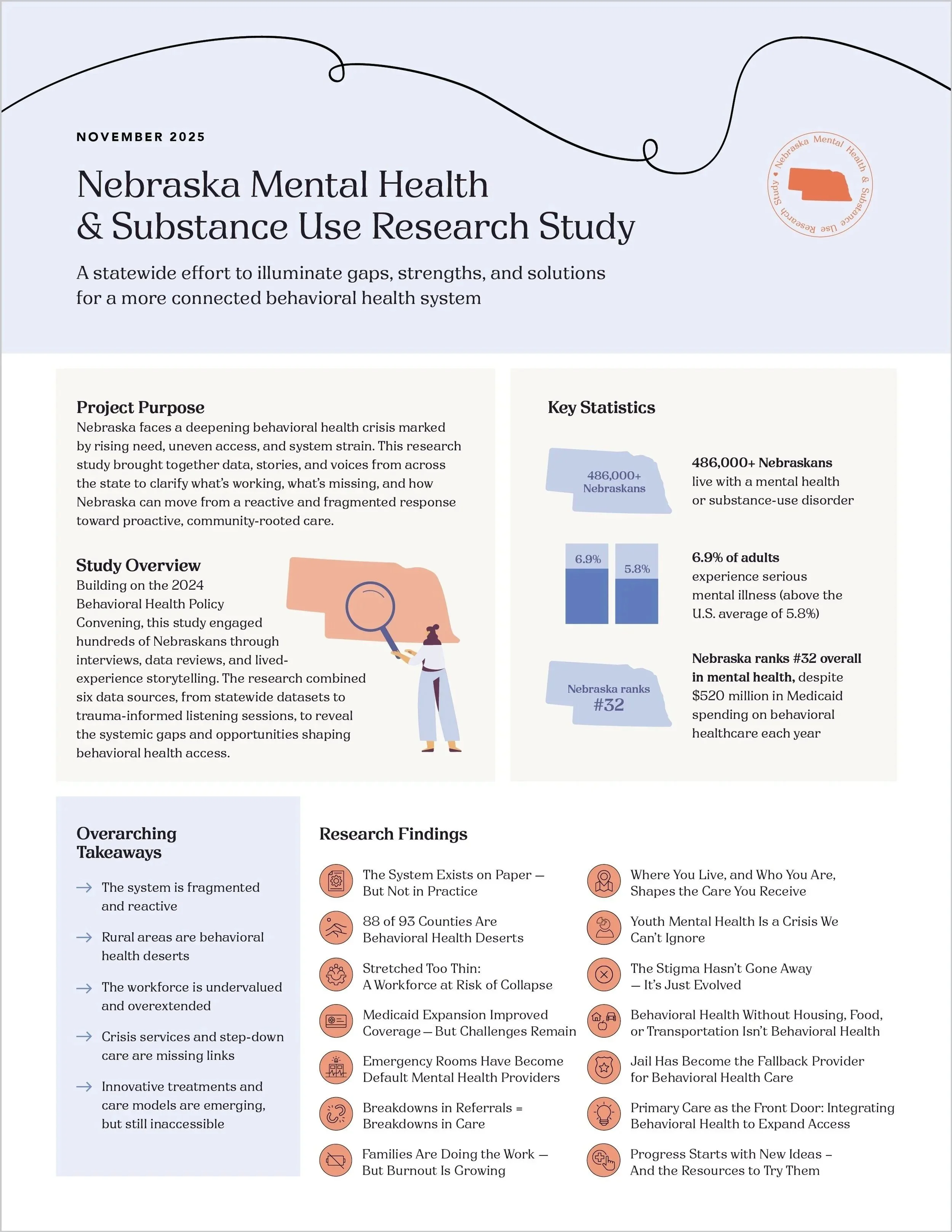
Project Overview
An overview of the Nebraska Mental Health & Substance Use Research Study and how community voices are shaping a more connected system.
-
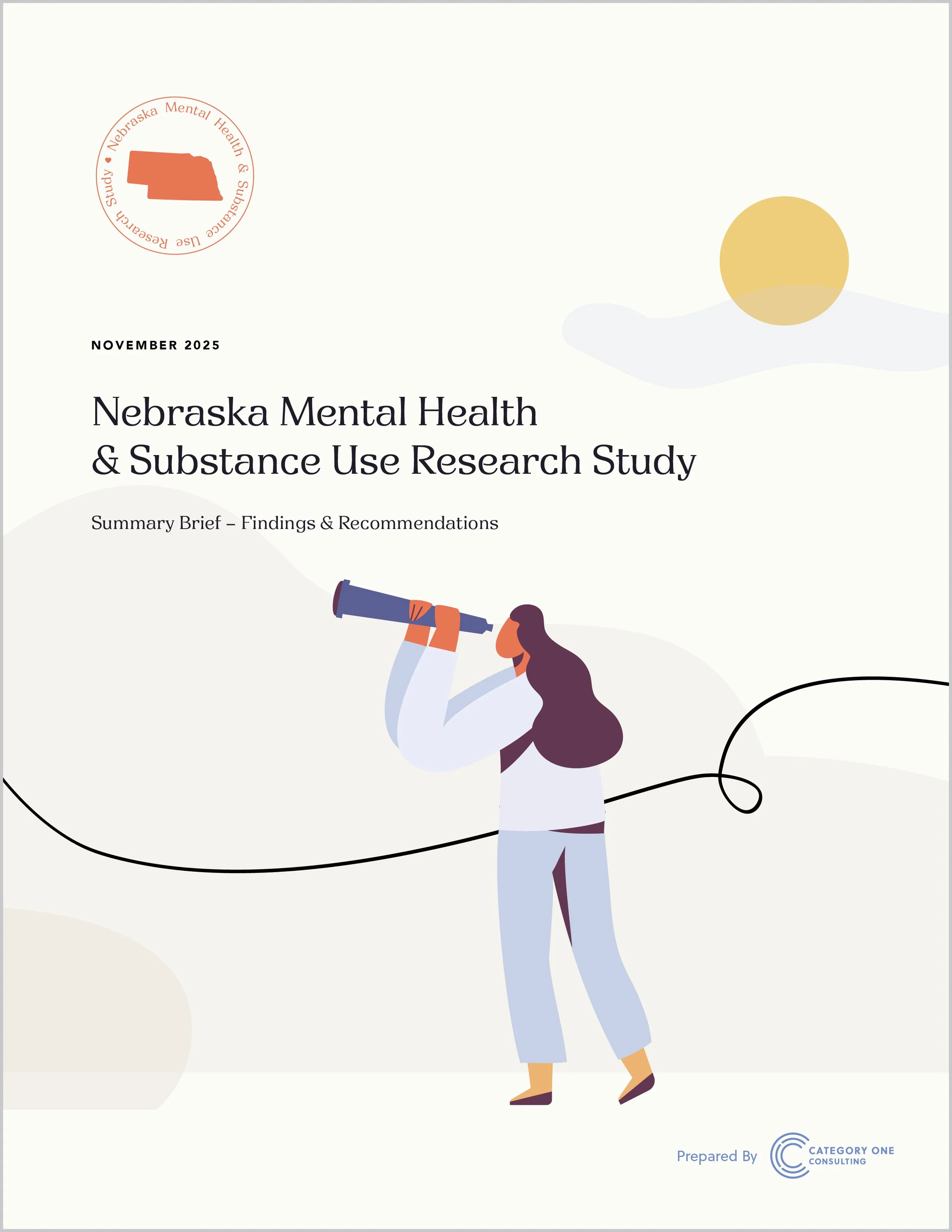
Summary Brief
A brief highlighting urgent findings, key gaps, and priority actions from the Nebraska Mental Health & Substance Use Research Study.
-
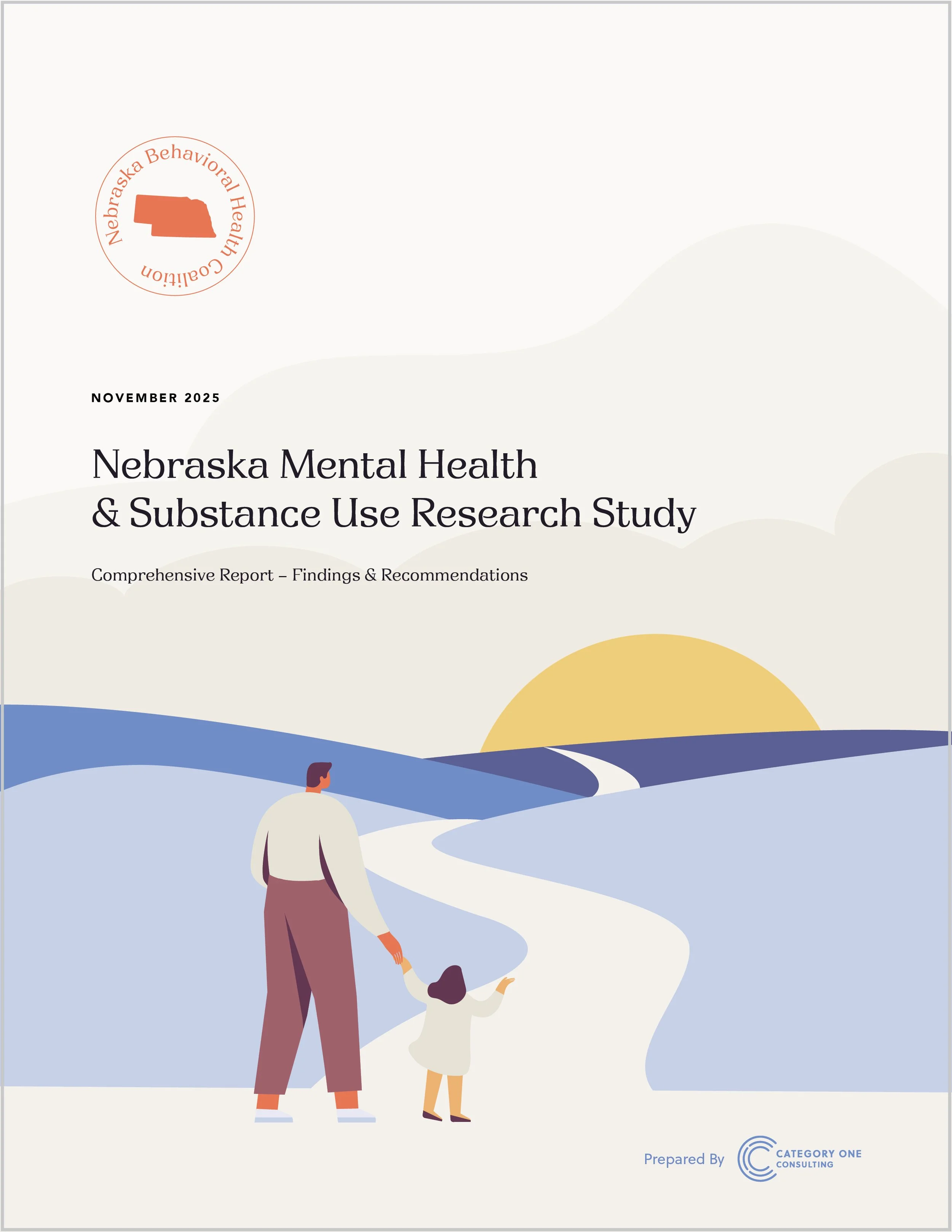
Comprehensive Report
A full findings report examining system gaps, regional disparities, and long-term system change in Nebraska’s behavioral health system.
Research Takeaways
-
![]()
The System Exists on Paper – But Not in Practice
Nebraska has defined a comprehensive behavioral health continuum, but without operational coordination and support, the system remains fragmented, disjointed, and inaccessible when people need it most.
-
![]()
88 of 93 Counties are Behavioral Health Deserts
Most Nebraskans live in counties without full access to behavioral health services. Workforce shortages and infrastructure gaps leave rural residents waiting, traveling, or going without care.
-
![]()
Stretched Too Thin: A Workforce at Risk of Collapse
Nebraska’s behavioral health system is grappling with a critical workforce shortage. Aging professionals, high turnover rates, and insufficient recruitment efforts have left the system strained, jeopardizing access to essential care across the state.
-
![]()
Medicaid Expansion Improved Coverage– But Challenges Remain
Nebraska’s Medicaid expansion extended health coverage to thousands of low-income adults, significantly increasing eligibility and access to benefits. Yet, ongoing system challenges continue to make it difficult for some individuals to connect with behavioral health services when they need them.
-
![]()
Emergency Rooms Have Become Default Mental Health Providers
Nebraska’s Emergency Departments (EDs) are increasingly serving as the primary access point for individuals experiencing behavioral health crises, highlighting systemic gaps in mental health care infrastructure.
-
![]()
Breakdowns in Referrals = Breakdowns in Care
Nebraska’s behavioral health system faces significant challenges in coordinating care across providers, leading to fragmented services and individuals falling through the cracks.
-
![]()
Families Are Doing the Work– But Burnout is Growing
Unpaid family caregivers are the backbone of Nebraska’s behavioral health system, yet many are stretched to their limits without adequate support.
-
![]()
Where You Live, and Who You Are, Shapes the Care You Receive
In Nebraska, factors like race, ethnicity, sexual orientation, and geography influence whether people can access care that feels culturally competent and responsive to their lived experience.
-
![]()
Youth Mental Health Is a Crisis We Can’t Ignore
Nebraska’s youth are facing escalating mental health challenges, with rising rates of depression and suicide highlighting the urgent need for targeted interventions.
-
![]()
The Stigma Hasn’t Gone Away–It’s Just Evolved
Despite increased awareness, stigma remains a significant barrier to seeking help for mental health and substance use issues, particularly in rural Nebraska.
-
![]()
Behavioral Health Without Housing, Food or Transportation Isn’t Behavioral Health
Addressing behavioral health requires more than therapy and medication; it necessitates meeting basic needs like housing, food, and transportation.
-
![]()
Jail Has Become the Fallback Provider for Behavioral Health Care
In Nebraska, limited access to behavioral health services has led to jails becoming de facto providers for individuals in crisis, highlighting the need for systemic change.
-
![]()
Primary Care as the Front Door: Integrating Behavioral Health to Expand Access
Integrating behavioral health into primary care settings expands access, supports early intervention, and ensures more holistic, whole-person care for all Nebraskans.
-
![]()
Progress Starts with New Ideas – And the Resources to Try Them
For individuals with complex or treatment-resistant conditions, traditional approaches are not enough. More research and consistent funding are needed.





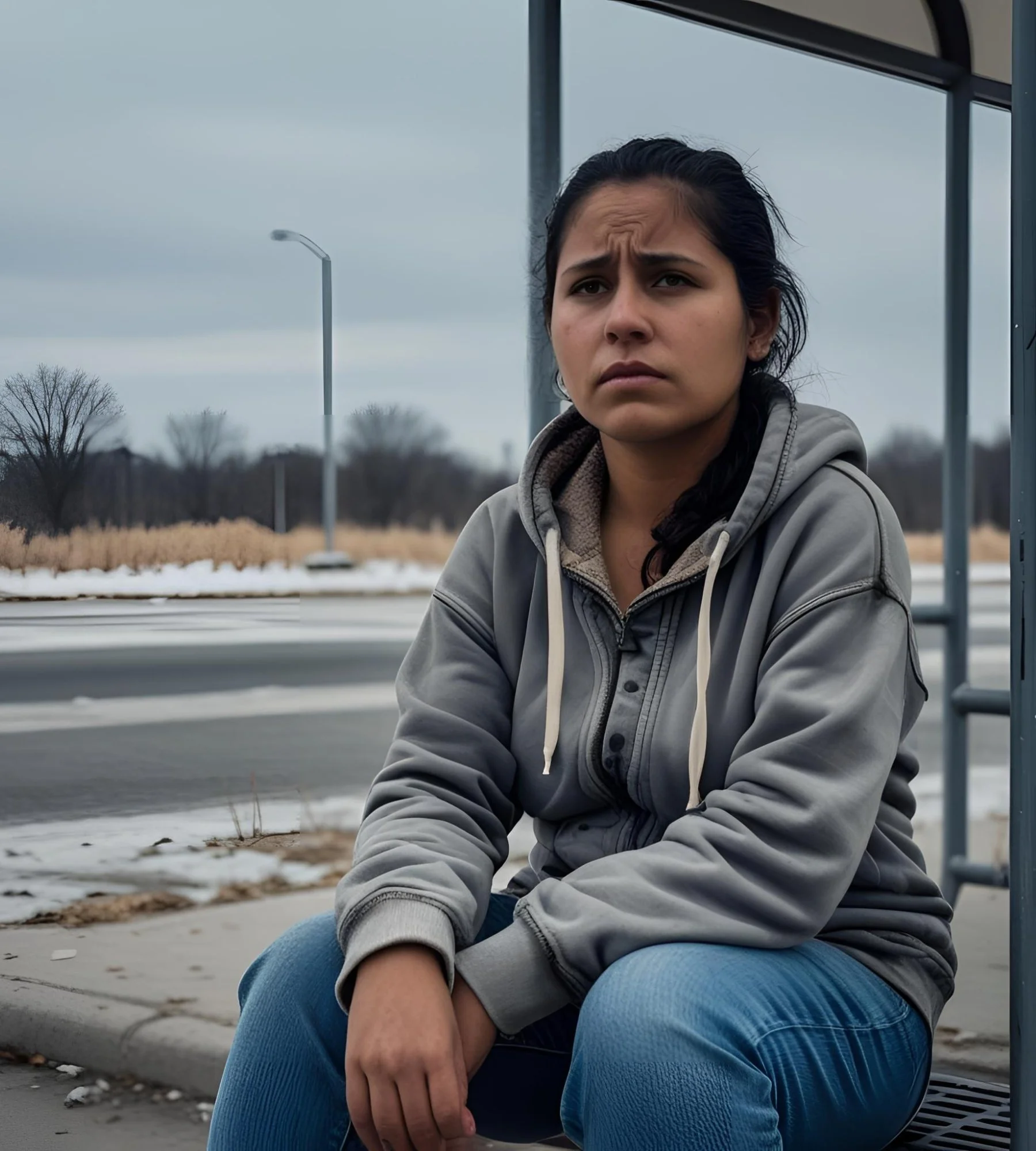







Data Sources
The research used a mixed-methods approach that blended data review, surveys, and facilitated community conversations to understand experiences and priorities across Nebraska. By integrating quantitative data with lived experience, the research identified key findings, priority areas, and implementation pathways to guide action.
Stakeholder Interviews
Over 100 interviews were conducted with providers, educators, nonprofit leaders, law enforcement personnel, judges, policymakers, and funders across all of Nebraska’s six behavioral health regions.
Literature Review
Academic research, evaluations, policy briefs, and media reports were reviewed to place Nebraska’s system in a broader best-practice context.
Document Review
State, regional, and nonprofit strategic plans, reports, and guidance documents were analyzed to assess system structure and gaps.
Community Comparisons
Peer states with similar demographics and geography were studied to identify replicable policies, innovations, and system improvements.
Public Data Analysis
State and national datasets (SAMHSA, CMS, Nebraska DHHS) were reviewed to evaluate prevalence, provider distribution, service use, and Medicaid enrollment.
Lived Experience Voices
Insights were gathered through listening sessions, peer communities, story banks, media excerpts, prior transcripts, and provider shared narratives.